Claude Enterprise merges chat and Cowork ahead of a November default change
Anthropic's unified workspace reaches Enterprise, with conditional automatic enablement, excluded configurations and usage charges that make the administrator settings consequential.
In this article
- Quick answers
- One conversation now covers chat and delegated work
- November 16 is a conditional default change
- The practical gain is continuity, with a local-computer limit
- Role settings determine who can act
- A single interface still produces variable bills
- Conversation history and retained outputs follow different rules
- Sources & method
Quick answers
Who is excluded from the Enterprise rollout?
Organizations using zero data retention, a HIPAA-ready configuration or customer-managed encryption keys remain on their current experience.
Does the seat price include usage?
No. The current Enterprise offer lists US$20 per seat per month, billed annually, with usage charged separately at API rates. Legacy contracts have separate transition terms.
Will tasks keep running after a laptop closes?
Cloud tasks can continue. Tasks that need local files or applications still require Claude Desktop to remain open.
The practical takeaway
Eligible Enterprise organizations can enable unified work now; November's conditional default change preserves existing administrator choices.
One conversation now covers chat and delegated work
Anthropic made its combined chat and Cowork experience generally available for Claude Enterprise on October 23. Employees can move from a question to work involving code and files within one conversation, with cloud tasks continuing across web, desktop and mobile. Administrators control who receives access.
The underlying merger began with Pro and Max on September 16. Anthropic had previously separated Cowork's larger assignments from chat, requiring users to choose where to begin. The Enterprise release extends that approach to managed organizations; it is not the first release of Claude's document or presentation capabilities.
November 16 is a conditional default change
Existing organizations start with the setting off. On November 16, untouched settings turn on only when Chat and Cloud code execution and file creation are enabled. Keep disabled preserves an opt-out; earlier choices persist. Missing prerequisites delay activation until both are enabled.
Organizations using zero data retention, a HIPAA-ready configuration or customer-managed encryption keys remain excluded. They retain their existing setup, despite the broader general-availability announcement.
Access also remains subject to Claude's supported locations. Its help center lists markets including the United States, United Kingdom, Canada and Australia; the Enterprise announcement does not establish a separate worldwide rollout.
The practical gain is continuity, with a local-computer limit
The earlier launch described turning a weekly business update into both a report and presentation within the same conversation. The useful change, in our analysis, is that the second output can build on the first task's context instead of requiring a separate handoff between modes.
For example, a hypothetical operations manager could ask Claude to compare supplied regional updates, then turn the findings into a spreadsheet and briefing. That illustrates the documented workflow, not a task we ran. Existing Cowork tasks, projects, connectors and skills carry over.
Cloud work can continue after a laptop closes, but tasks involving local files or applications need Claude Desktop open. Enterprise conversations default to Manual permissions, which asks before actions. The help center also lists missing conversation branching and Add from GitHub support; older Cowork tasks remain findable by name but are excluded from search.
Role settings determine who can act
Anthropic describes isolated cloud virtual machines, sandbox network access disabled by default, and connector credentials held outside the sandbox. We have not independently assessed that architecture.
The role documentation explains a less visible deployment issue: custom permissions apply only after members move to Custom roles. Leaving someone on the built-in User role preserves organization-wide access. Connector grants also combine across roles, so blocking a connector in one role does not cancel permission granted by another.
That makes group membership consequential. In our reading, a restricted pilot depends on the permissions participants actually inherit, rather than simply creating a group with a restrictive name.
A single interface still produces variable bills
The current price page lists Enterprise at US$20 per seat per month, billed annually before tax, plus consumption at API rates. The plan documentation distinguishes a 20-seat self-service minimum from 50 seats for sales-assisted purchasing. The seat charge buys access, with no included token allowance under the current usage-based model.
Existing contracts need separate treatment. Anthropic says older Chat and Chat + Claude Code seat pricing remains until renewal, when those organizations transition to the single Enterprise seat. Older Standard/Premium seat-based organizations retain their existing terms until migration and cannot continue that billing model beyond their next renewal. The interface announcement should not be read as an immediate rewrite of every contract.
Efficient mode limits the unified experience to Sonnet and Haiku; new sessions start with Sonnet 5.5 at low effort. Other products are unaffected.
Anthropic's consumption guide explains why controls matter: multi-step Cowork work generates intermediate token usage that users may not see. A group limit assigns a ceiling to each member; a pooled group budget, still beta, shares one monthly amount. Exhausting the pool pauses everyone in that group, and usage can slightly exceed a limit before stopping.
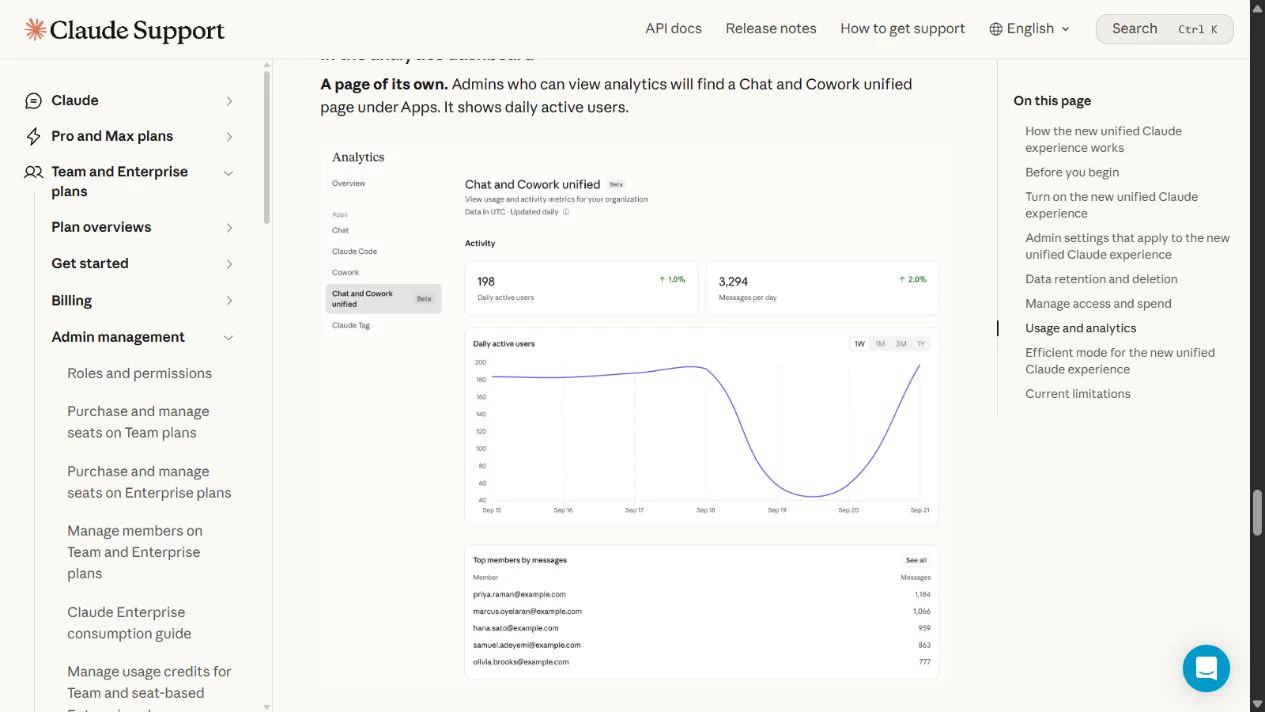
Administrators also get a separate analytics view for unified usage. The guide's example carries Beta labels and sample figures; those illustrate the reporting interface, not customer adoption or proof that the experience is enabled.
Conversation history and retained outputs follow different rules
Anthropic's retention documentation sets a 30-day minimum for custom retention. Activity in a conversation or its associated cloud session resets the chat clock. Chats inside projects follow project retention instead, and projects are retained indefinitely by default. Merely choosing a short chat period therefore does not establish the same lifespan for project work.
Artifacts generally follow their own applicable retention period, rather than disappearing with their originating conversation; publicly linked artifacts have further exceptions. Scheduled tasks and their runs survive deletion of their originating conversation, so deleting a discussion does not stop recurring work.
Sources & method
AI-assisted reporting from Anthropic's announcement, earlier release and current product, administration and pricing documentation. These are vendor sources, not independent corroboration. We have not tested the unified experience or verified access in a customer organization.
- Anthropic: Claude Cowork and chat come together for EnterprisePublished October 23, 2026
- Anthropic: Set up and manage the unified Claude experience for EnterpriseAccessed October 25, 2026
- Anthropic: Claude Cowork and chat are now one ClaudePublished September 16, 2026
- Anthropic Help Center: Claude Cowork and chat are one ClaudeAccessed October 25, 2026
- Anthropic: Claude pricingAccessed October 25, 2026
- Anthropic: What is the Enterprise plan?Published September 1, 2026
- Anthropic: Set up role-based permissions on Enterprise plansAccessed October 25, 2026
- Anthropic: Configure custom data retention controls for Enterprise plansAccessed October 25, 2026
- Anthropic: Claude Enterprise consumption guideAccessed October 25, 2026
- Anthropic: Where can I access Claude?Published March 16, 2026
Source pages reviewed October 25, 2026. Analysis and suggested evaluation methods are AI Toolcast’s own.
This article contains no sponsored placement or affiliate links.
Found a possible error? How to report a correction.
Keep reading
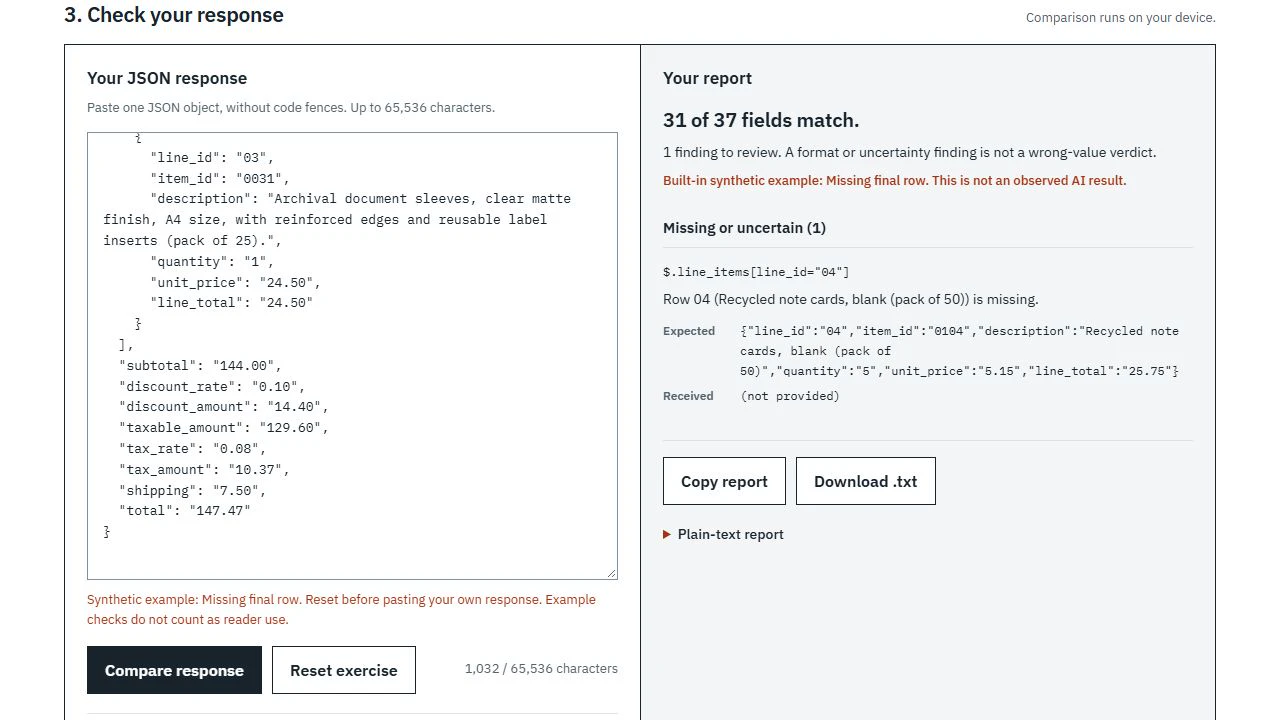
Your invoice JSON passes its schema. Does it match the invoice?
A practical invoice-to-JSON exercise shows how a changed ID, missing row or swapped quantity can survive a shape check. Follow the source, compare the response and learn what a match actually proves.
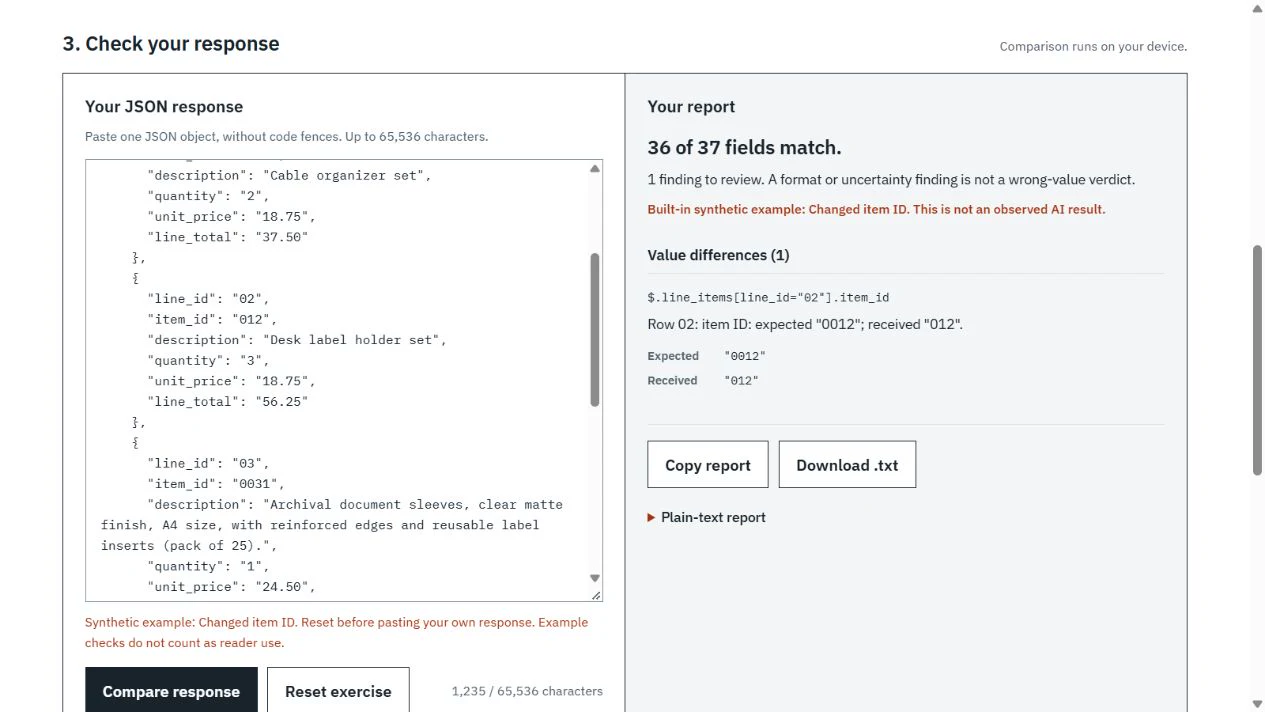
AI Toolcast releases a free checker for one invoice extraction exercise
Our AI Extraction Checkup pairs a synthetic invoice with explicit output rules, local JSON comparison and a downloadable report. It is a small practice exercise, with open source and clearly limited scope.
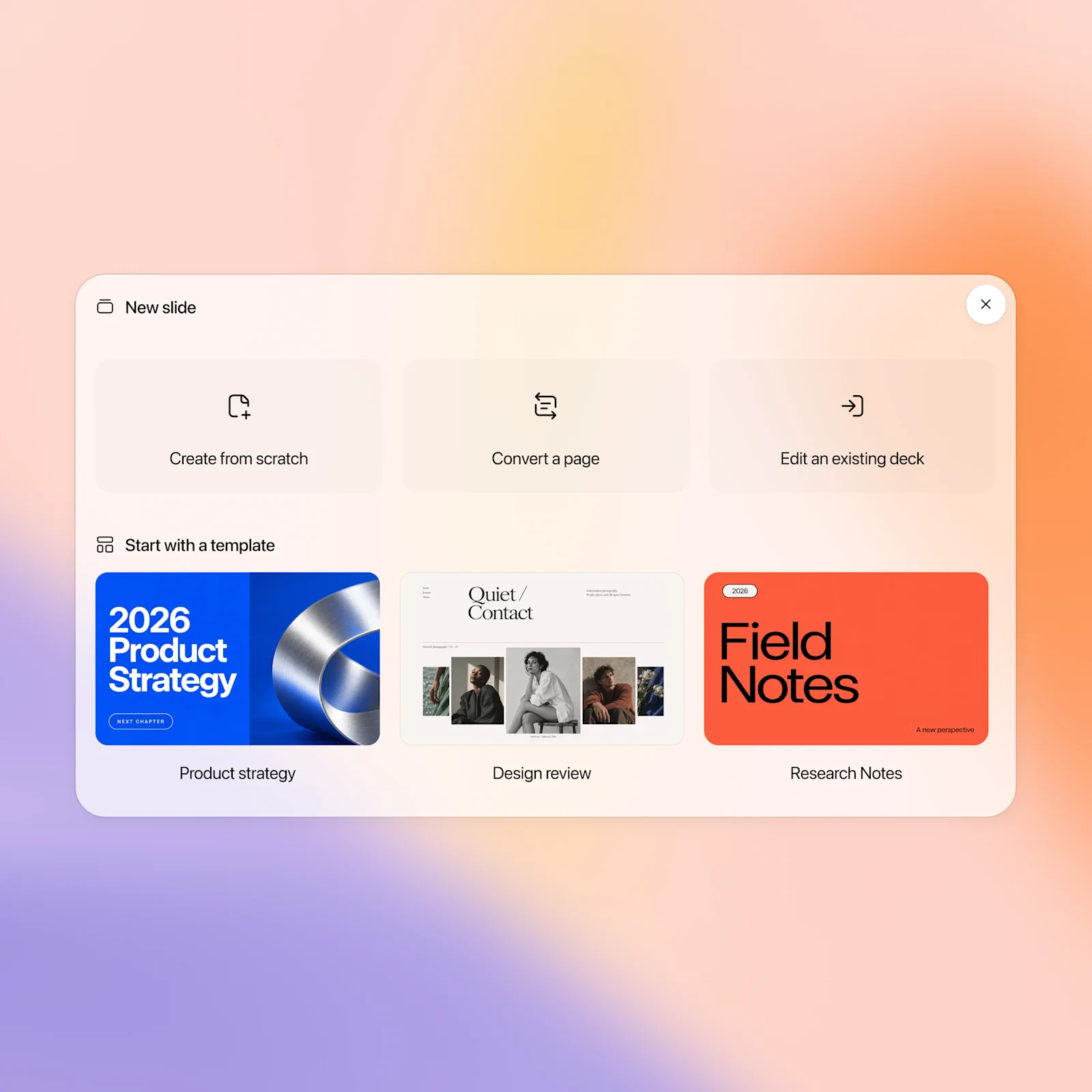
ChatGPT Slides brings shared presentation editing into Space
OpenAI is rolling out collaborative decks to eligible Pro, Business and Enterprise users. Direct editing and exports extend the workflow, while launch permissions and a separate Windows desktop requirement shape access.