Claude adds an Anthropic-managed Google Cloud option for agent tools
Anthropic's new access route brings Claude Platform features to Google Cloud customers. The implementation guides reveal separate account setup, regional pricing and agent controls behind the shared cloud bill.
In this article
- Quick answers
- Claude's platform joins the cloud procurement workflow
- What the additional tools make possible
- Moving an application means setting up a new organization
- Cloud billing and data location are different decisions
- Retention and agent access have their own limits
- The commercial benefit is consolidation, with conditions
- Sources & method
Quick answers
What is new about Claude on Google Cloud?
The Anthropic-managed option is generally available. Google says both deployment routes receive new models at launch; the new route also receives Claude Platform features immediately.
Does an existing Claude organization transfer?
No. Setup creates a separate organization. Existing workspaces, settings and stored resources do not automatically move.
The practical takeaway
The new route offers earlier access to Claude Platform features through Google Cloud procurement, but moving workloads requires a new organization and separate decisions about data geography, retention and running agents.
Claude's platform joins the cloud procurement workflow
Anthropic made its own managed Claude service generally available through Google Cloud on October 22. Developers can obtain Claude Platform capabilities through Google Cloud identity controls and billing, including code execution, Skills and the beta Managed Agents service. The change gives teams another way to buy and operate Claude applications through an existing cloud relationship.
Claude was already available through a Google-managed service, which remains available. Google says both routes receive new models at launch and carry the same base model prices. The difference is when surrounding platform features arrive: immediately on the Anthropic-managed route, and after integration on the Google-managed one. For developers, the new option changes the available application components as well as the procurement route.
What the additional tools make possible
Consider a hypothetical reporting application that receives a sales spreadsheet and returns a calculation and chart. Claude's code-execution tool can process uploaded files, run Python or Bash and generate downloadable output within an API conversation. The application can use those capabilities to calculate results and return an artifact in the same workflow. This example illustrates the documentation; it is not a test we conducted.
Tool usage also affects the bill. Anthropic's code-execution guide waives separate execution charges when a request includes web_search_20260209, web_fetch_20260209 or later versions; standard token charges remain. Otherwise, execution time has a five-minute minimum, with 1,550 free hours per organization each month and additional usage charged at $0.05 per container-hour. Including files in the code-execution request causes execution time to be metered even if Claude does not invoke the tool, because the files are preloaded into the container.
Moving an application means setting up a new organization
Adoption starts with a Marketplace purchase, enabling the service and activating a new Anthropic organization for the Google Cloud project. It is separate from an existing direct-API or Claude Enterprise organization. Workspaces, Console settings and stored resources stay behind; the original organization can continue serving traffic during a gradual move.
The request route changes too. Anthropic's comparison guide identifies the new service by claude.googleapis.com and the AnthropicGoogleCloud SDK client, whereas the Google-managed route uses Agent Platform endpoints and AnthropicVertex. Both authenticate through Google Cloud credentials, but require their own access grants. A shared cloud login therefore does not make the two integrations interchangeable.
Cloud billing and data location are different decisions
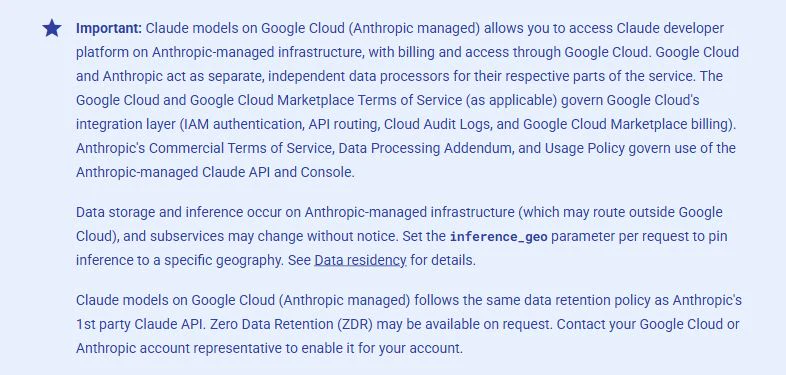
Google's implementation guide says Google and Anthropic are independent processors for their respective service layers. Google handles the integration, including identity, routing and billing; Anthropic governs the Claude API and Console under its own terms. The guide explicitly warns that data storage and inference may route outside Google Cloud.
Regional terminology needs care. Anthropic's launch announcement describes US and Global endpoints, while its current setup guide tells developers to leave the endpoint location at global and request US-only inference separately. The residency guide documents the inference_geo parameter set to us for Claude 4.6 and later, with a 1.1-times rate across input, output and cache tokens. Global inference uses standard pricing.
Storage has another control: workspace geography. The residency guide currently lists only the US for that setting and says it cannot change after workspace creation. Selecting where a model computes an answer is consequently different from choosing where files and other stored content reside.
Retention and agent access have their own limits
Zero Data Retention requires separate enablement for each Anthropic organization. It also does not cover every feature: Anthropic excludes code execution and the Claude Console, while Managed Agents session transcripts persist until deletion. An application using these stateful capabilities cannot infer that all its data disappears merely because another API workflow qualifies for ZDR.
Managed Agents sessions introduce a further operational distinction. Revoking their creator's Google Cloud access does not stop existing sessions or scheduled deployments. Anthropic documents separate interruption and deployment controls. Restricted betas still require eligibility in the new organization, and MCP tunnels are unsupported.
Self-hosted execution also takes additional work. Anthropic's sandbox guide says its packaged CLI and SDK workers do not support this Google Cloud route; developers must implement a worker against the documented work endpoints. Running tools on owned infrastructure still sends their inputs and outputs to Anthropic's control plane.
The commercial benefit is consolidation, with conditions
Google says usage can draw down eligible cloud commitments. That is useful for teams consolidating procurement, but eligibility and negotiated terms still matter. Anthropic warns that existing discounts must be arranged before usage because they cannot be credited retroactively.
The launch also makes Opus 5.5 Fast Mode available through this route at $8 per million input tokens and $40 per million output tokens. Those are Fast Mode rates, not a universal Claude price. Choosing between the routes therefore involves feature timing, data controls and the value of Google's native integrations, including BigQuery and Model Armor.
Sources & method
AI-assisted reporting from Anthropic and Google announcements and implementation documentation, checked October 26, with original analysis. Both companies are parties to the offering. We have not tested the service or confirmed access for an individual customer.
- Anthropic: The full Claude Platform, available on Google CloudPublished October 22, 2026
- Google Cloud: Expanding Claude availability and deployment choice on Google CloudPublished October 23, 2026
- Claude Platform Docs: Claude Models on Google Cloud (Anthropic managed)Accessed October 26, 2026
- Claude Platform Docs: Comparing the two Google Cloud offeringsAccessed October 26, 2026
- Google Cloud documentation: Use Claude models on Google Cloud (Anthropic managed)Accessed October 26, 2026
- Claude Platform Docs: Data residencyAccessed October 26, 2026
- Claude Platform Docs: Code execution toolAccessed October 26, 2026
- Claude Platform Docs: API and data retentionAccessed October 26, 2026
- Claude Platform Docs: Self-hosted sandboxesAccessed October 26, 2026
- Creative Commons Attribution 4.0 license for the Google documentation excerptAccessed October 26, 2026
Source pages reviewed October 26, 2026. Analysis and suggested evaluation methods are AI Toolcast’s own.
This article contains no sponsored placement or affiliate links.
Found a possible error? How to report a correction.
Keep reading
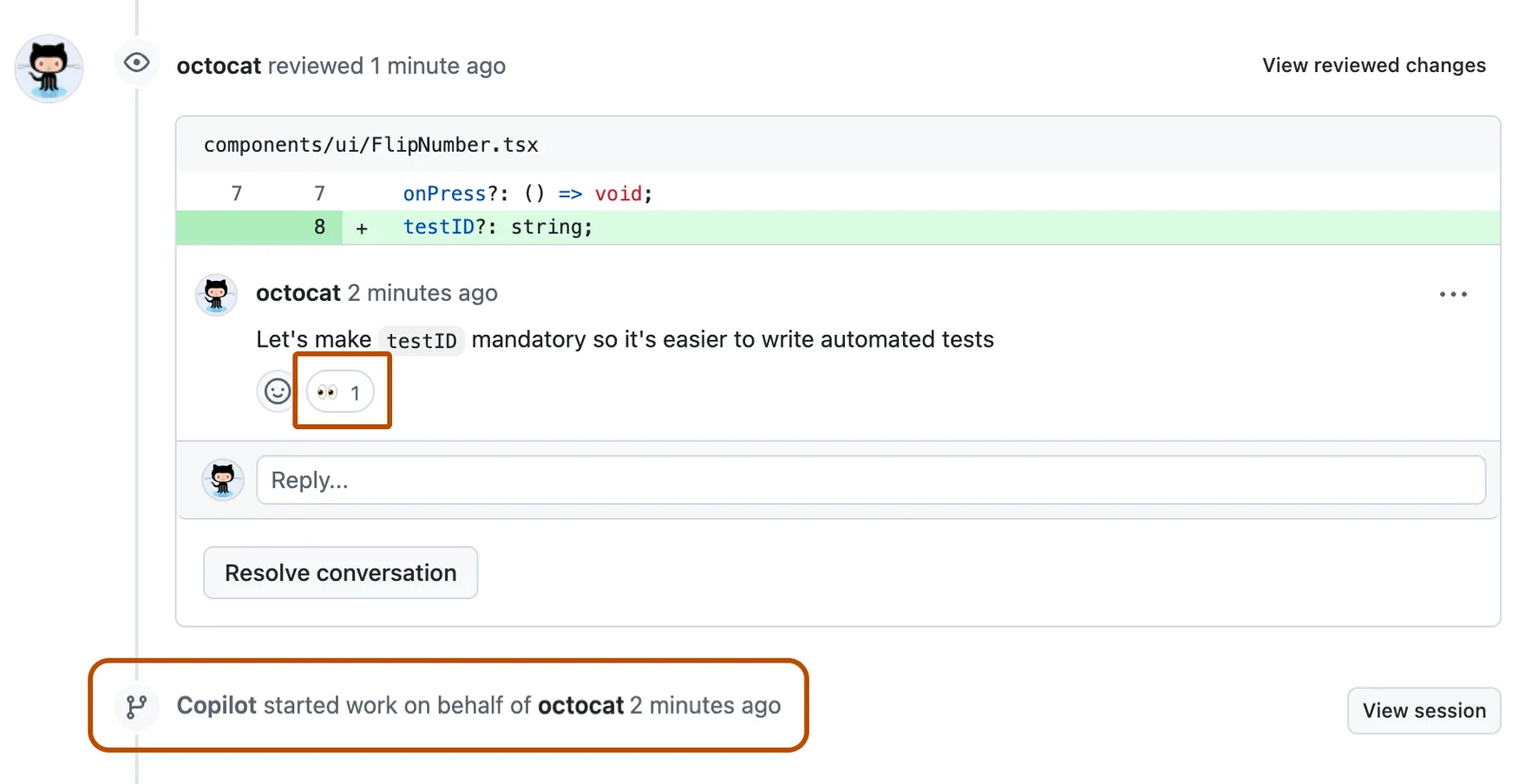
GitHub combines Copilot and notifications in its Teams app
The consolidation comes with a November 16 retirement deadline. Sandbox requirements, thread capture and separate cloud charges make the migration more than an app rename.
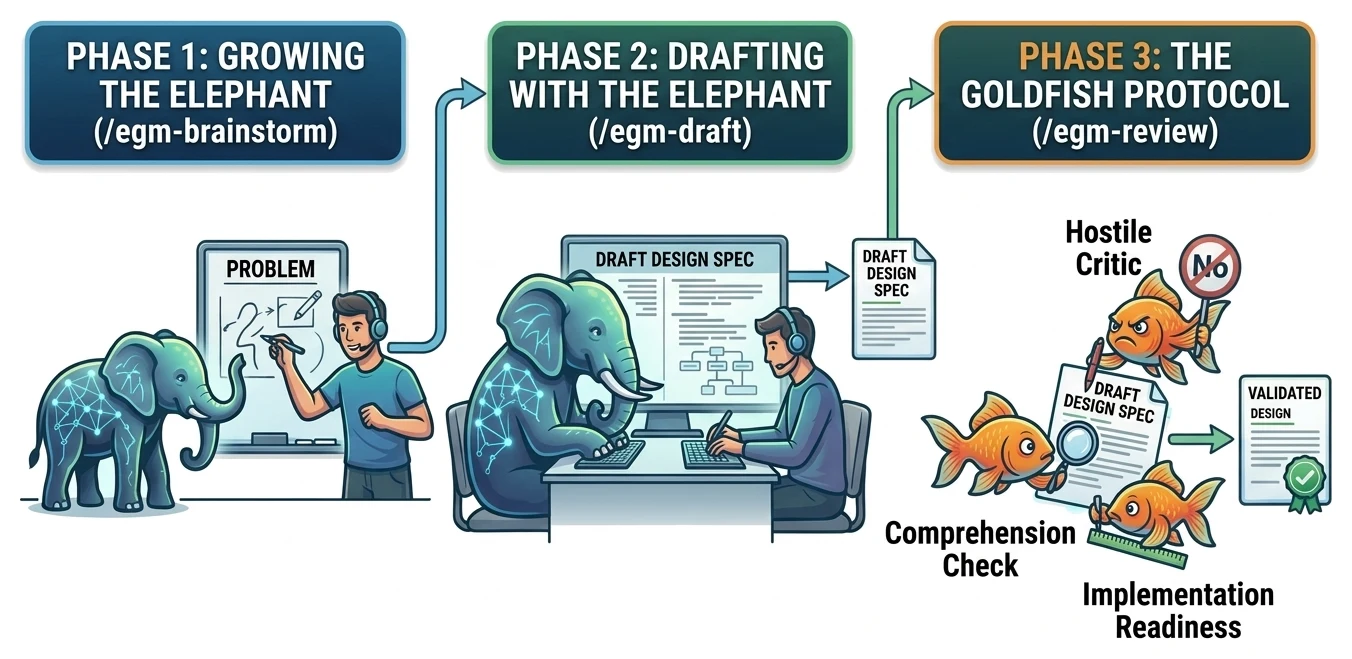
Google releases Elephant-Goldfish plugin to review AI coding plans
Google's open-source plugin separates design conversations from fresh-context reviews. Its documentation reveals host-specific limits, human approval steps and the maintenance work behind reusable specifications.
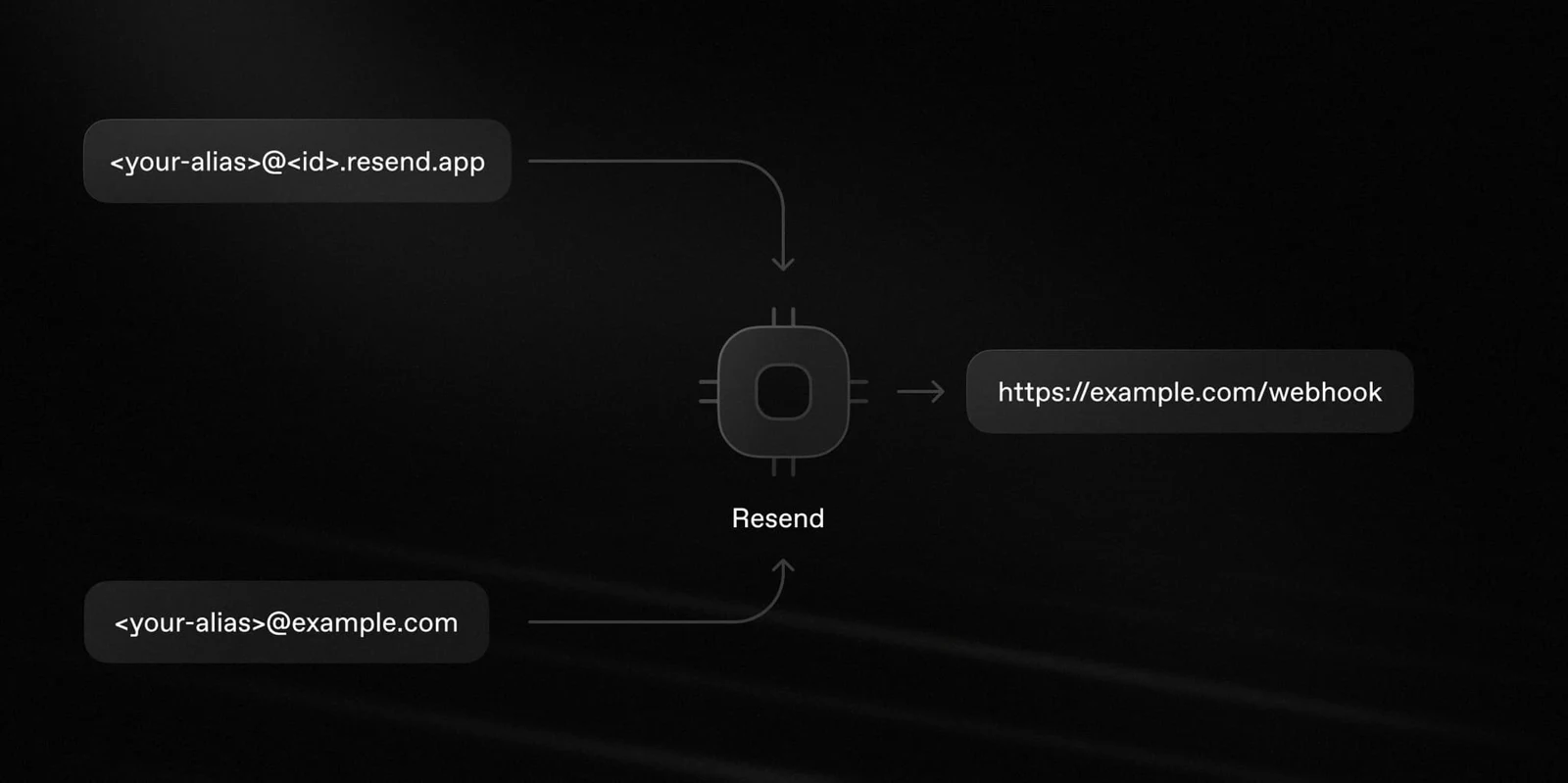
Resend Inboxes adds shared email for agents, with setup and permission limits
Resend’s new inboxes combine conversations, team handoffs and agent controls. Its documentation adds consequential details: hosted-only MCP support for inbox tools, a forwarding option and different permissions for reading and sending.